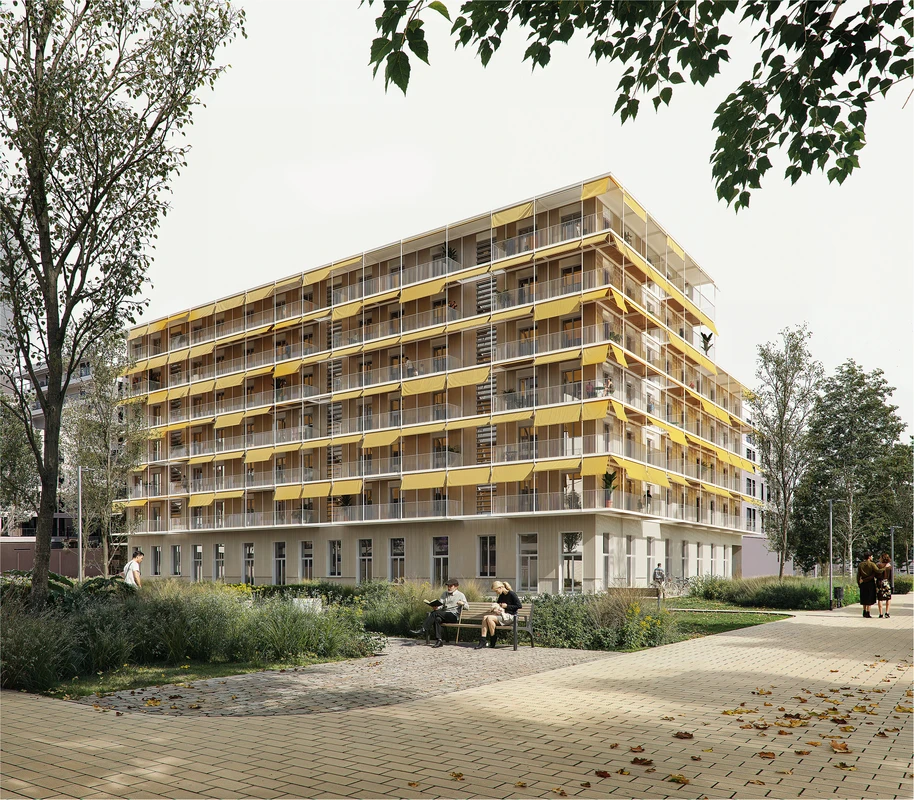
Second prize in the competition for the construction of a timber-structured social housing building on Miquel Porter i Moix Street in Barcelona, promoted by INCASÒL. Project carried out in collaboration with Martí Sanz
Inhabiting the Ark is a proposal for 76 social housing units on Miquel Porter i Moix Street in Barcelona. The project proposes a way of living that combines spatial quality, environmental sustainability, and construction efficiency, understanding housing as an infrastructure capable of adapting to the social and climatic changes of both the present and the future.
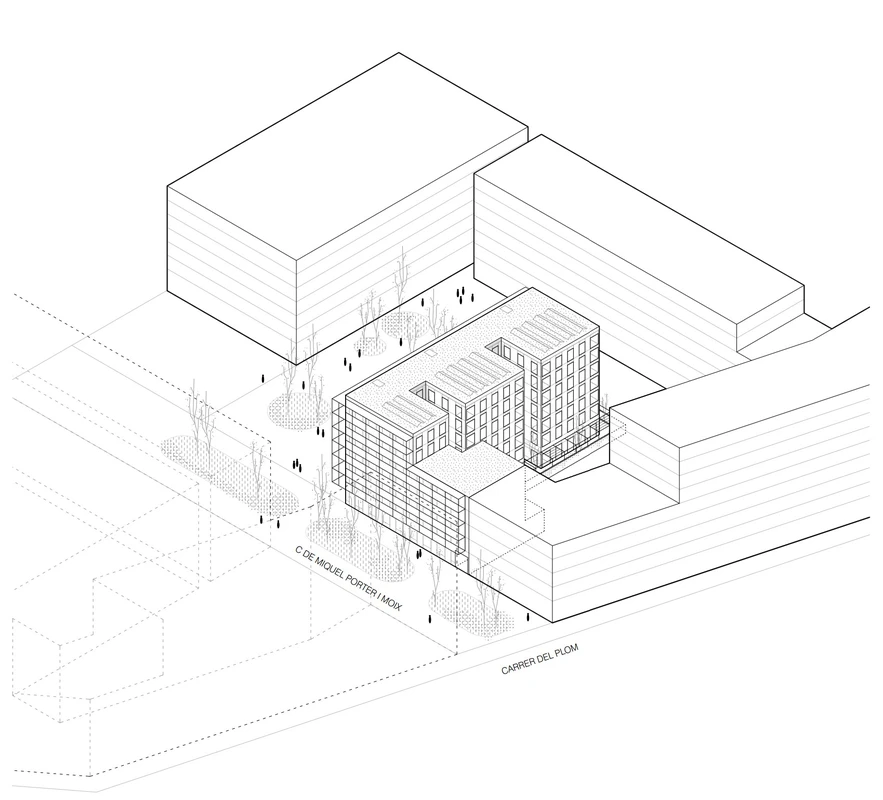
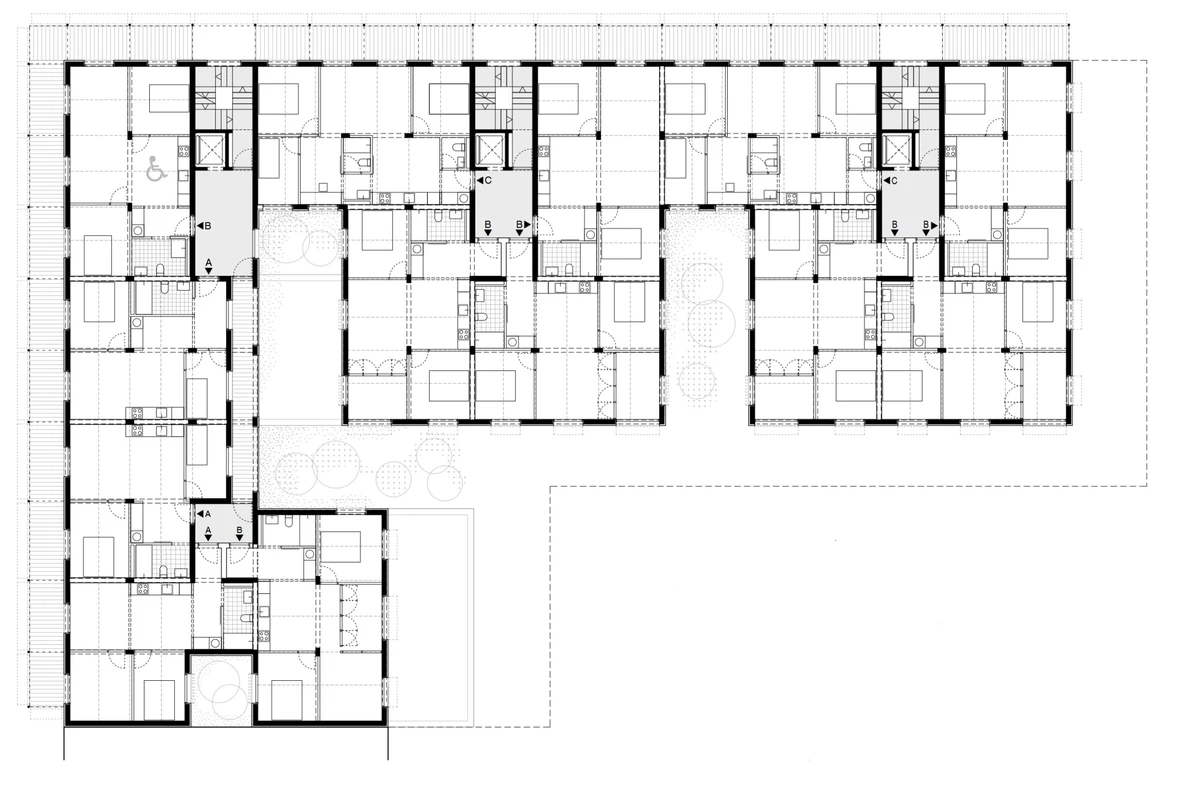
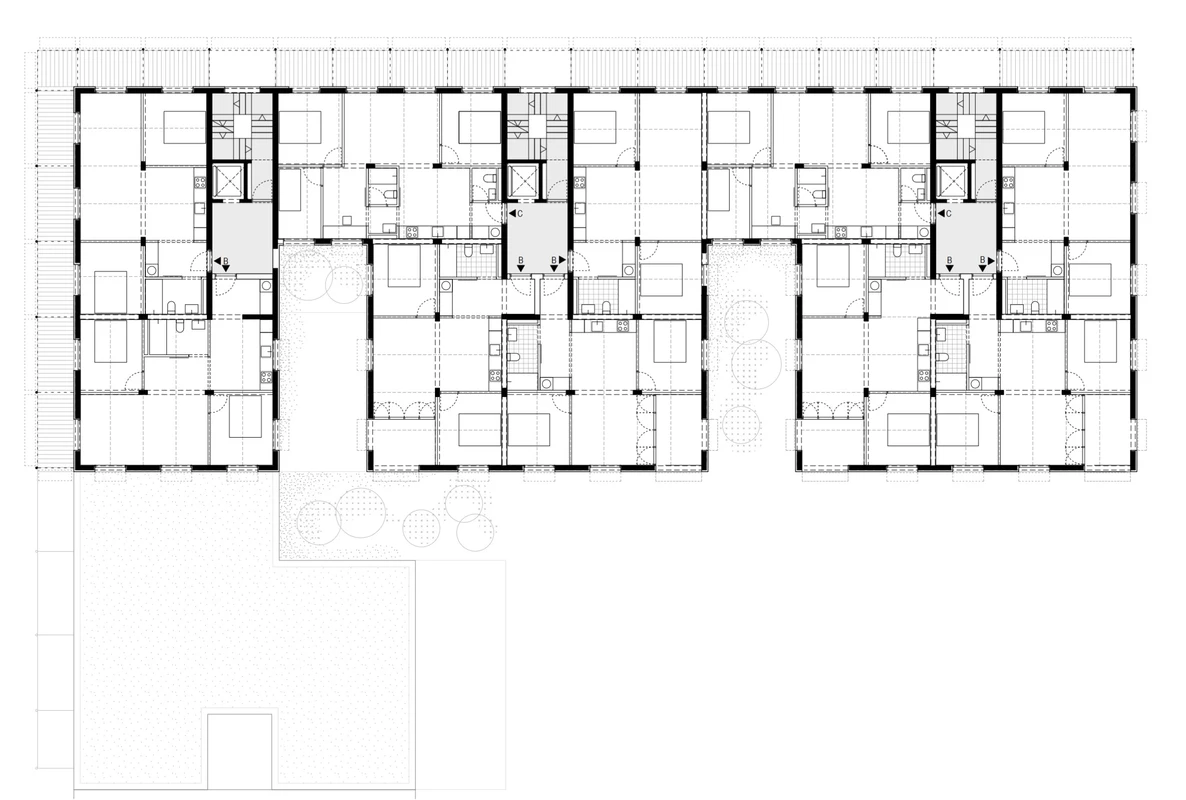
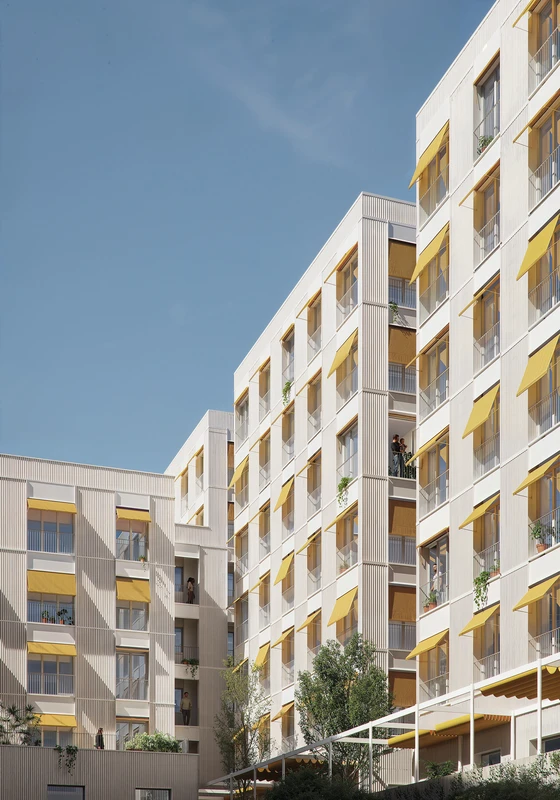
The building occupies a large urban plot and responds simultaneously to two seemingly opposing conditions. On the one hand, it consolidates the urban frontage and reinforces the continuity of the public space defined by the planning framework. On the other, it folds inward toward the center of the block, generating a sequence of open courtyards that bring natural light, ventilation, and vegetation into the heart of the building.
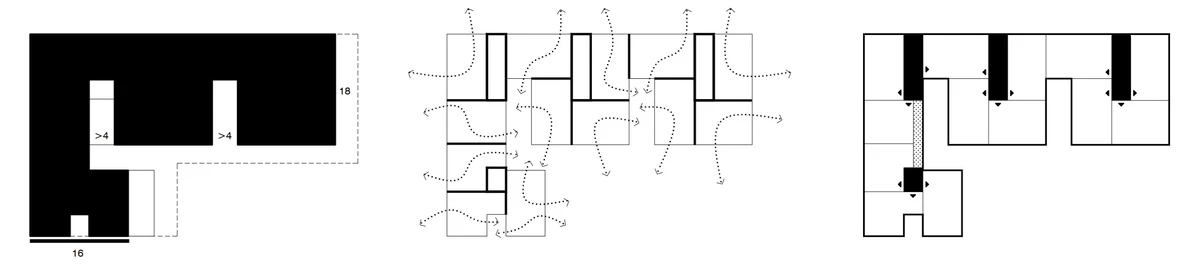
The proposal is organized into three distinct residential communities of 24, 25, and 27 dwellings. This division creates more manageable scales of coexistence and facilitates simpler community management while maintaining the efficiency of a large-scale development. The circulation cores are located on the northern side of the site, reserving the most favorable orientations for the dwellings.
The aggregation of the housing units creates courtyards that connect the different communities and ensure that every dwelling benefits from cross ventilation and a direct relationship with the outdoors. The spatial arrangement seeks to maximize environmental quality without relying on complex systems, making light, air, and the relationship with open spaces the project’s primary resources.
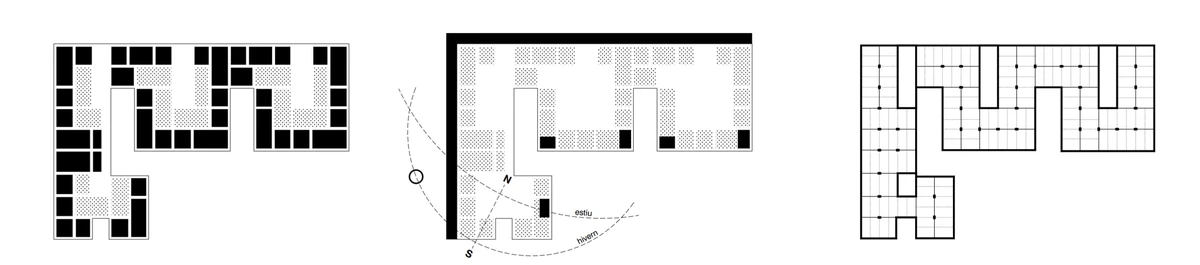
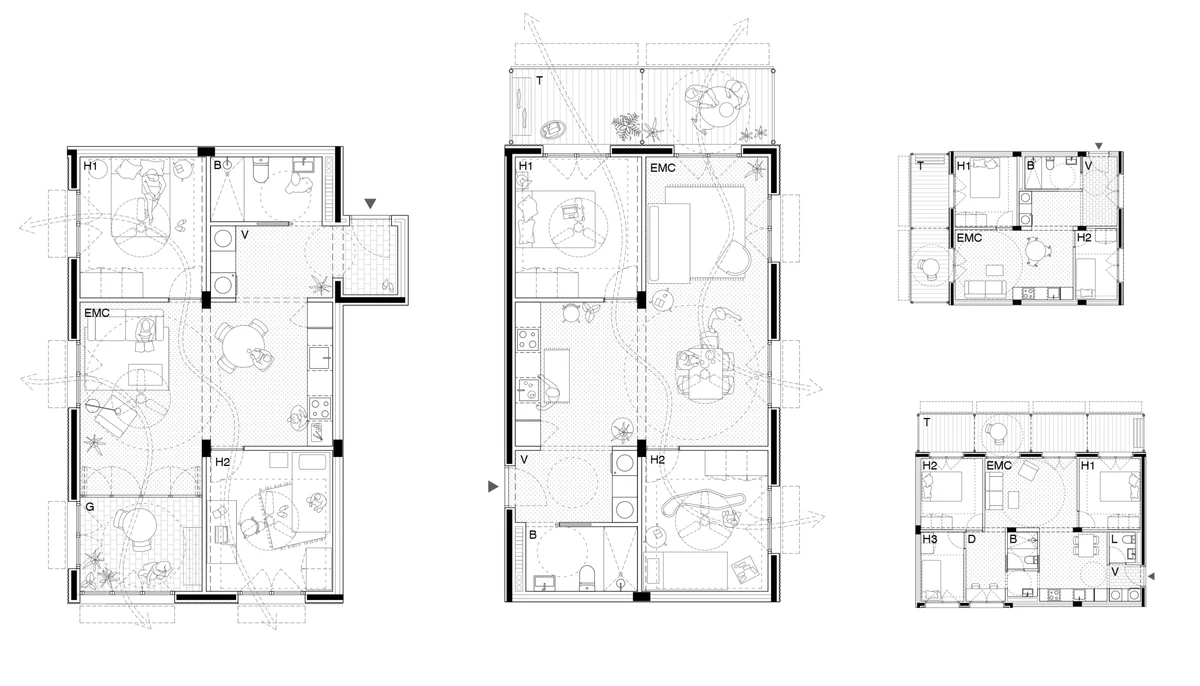
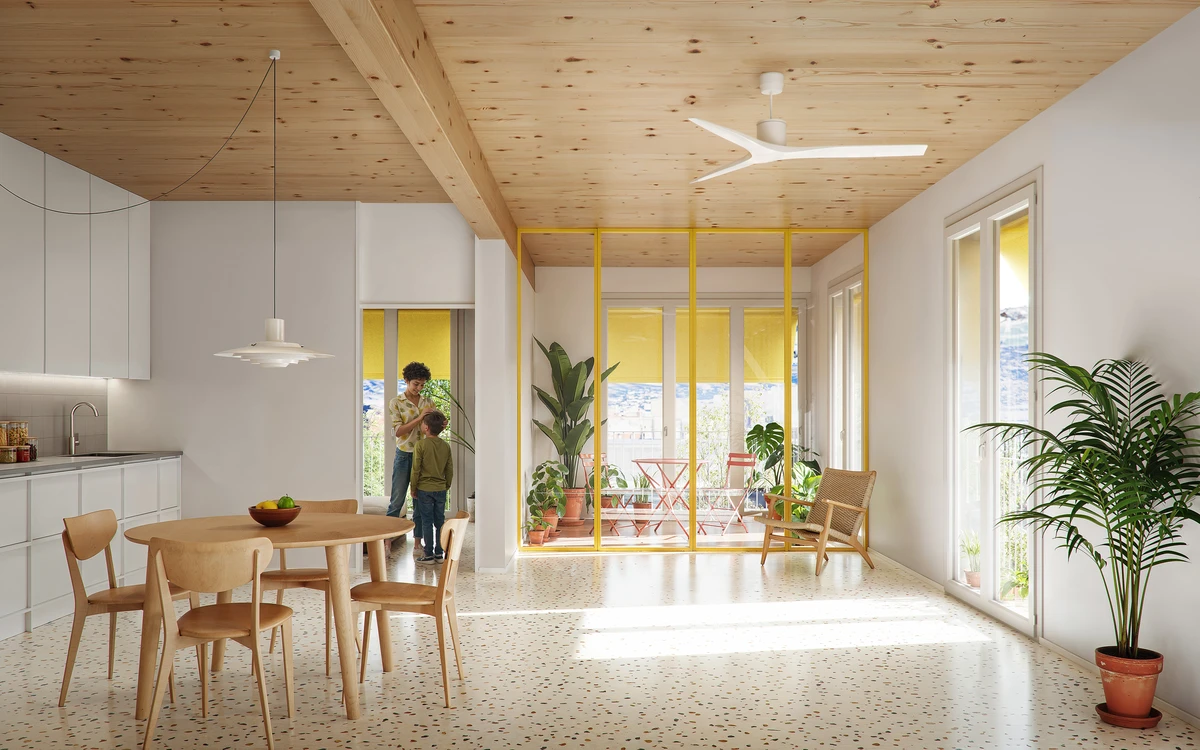
The dwellings are based on compact and flexible floor plans, with an organization that prioritizes the de-hierarchization of domestic spaces. The main rooms are connected through a continuous diagonal space that traverses the dwelling and links its different façades. This configuration enhances visual permeability, natural ventilation, and greater adaptability of domestic uses. Bedrooms are designed with similar dimensions to accommodate different patterns of occupation over time.
All dwellings feature dual-aspect façades and generous outdoor spaces. Facing the street, these spaces take the form of continuous balconies that strengthen the relationship with the city. Facing the interior of the block, they become protected galleries that offer greater privacy and contribute to the climatic regulation of the homes. Wide enough to be genuinely habitable, these spaces expand the possibilities of everyday use and become an extension of domestic life.
Environmental sustainability is one of the central pillars of the proposal. The open courtyards, galleries, protected terraces, and cross ventilation allow the building to adapt to different seasons throughout the year. In winter, the compact configuration promotes solar gain and heat retention. In summer, the opening of exterior spaces and solar protection systems transform the building into a porous structure capable of dissipating accumulated heat.
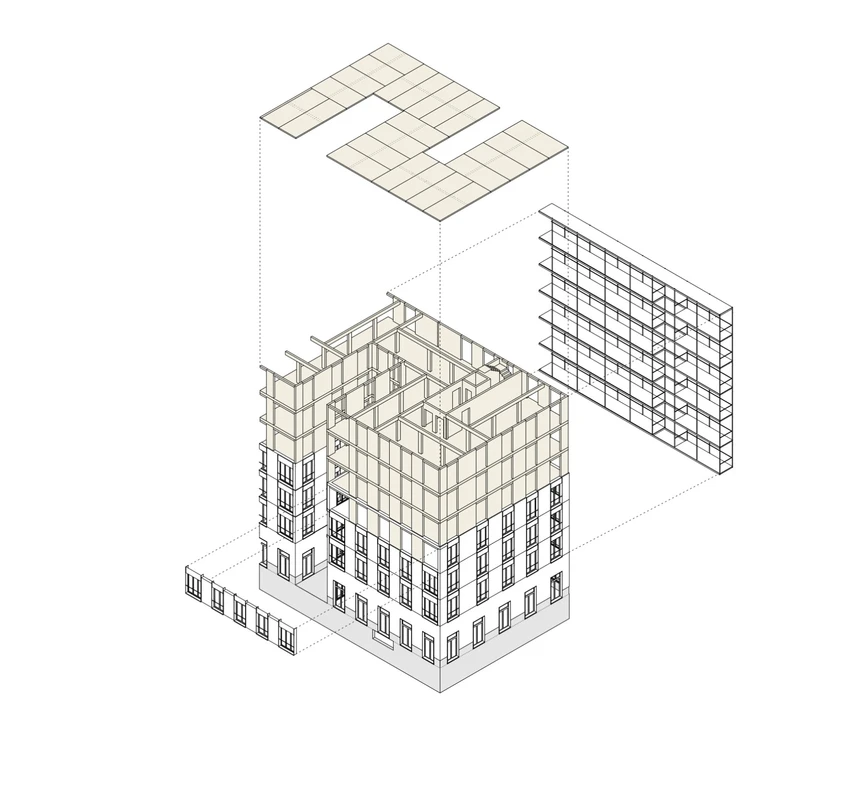
The building envelope incorporates insulation levels exceeding regulatory requirements and eliminates major thermal bridges through ventilated façades. Thermal mass is concentrated in the mineral floor slabs, while exposed timber ceilings help regulate indoor humidity and improve environmental comfort. Together, these strategies significantly reduce heating and cooling demands and contribute to achieving zero-emission building targets. The project also incorporates specific measures to reduce water consumption and promote more efficient resource management. Vegetation plays an active role in the environmental strategy, both within the courtyards and on the roof, helping to mitigate the urban heat island effect and improve environmental conditions in shared spaces.
Timber construction is another fundamental decision of the project. The structural system is conceived from the outset to optimize material use and reduce the building’s environmental impact. Load-bearing CLT walls brace the overall structure and are used in cores and façades, while much of the building is resolved through glulam columns and beams, reducing the total volume of timber required. The short structural spans allow the thickness of floor panels to be minimized.